
Why Art Therapy Is Helpful for Neurodiverse Children | Beth Patane, Art Therapist
Art Therapy • Neurodiversity • Communication
Why Art Therapy Is Helpful for Neurodiverse Children
Sometimes, communication challenges make it hard for neurodiverse children to express themselves with words—but through art and play, they connect, create, and communicate in powerful ways.
Why communication can be challenging
Many neurodiverse children—especially those on the autism spectrum or with language processing differences—struggle with speech, context, and back-and-forth conversation. Even when they want to connect, the words may not come easily, or conversations may feel disorganized and one-sided.
This doesn’t mean they lack understanding or emotional depth—it means their brains communicate differently. Art therapy creates a bridge between internal experiences and outward expression without relying solely on language.
How art therapy helps connection and expression
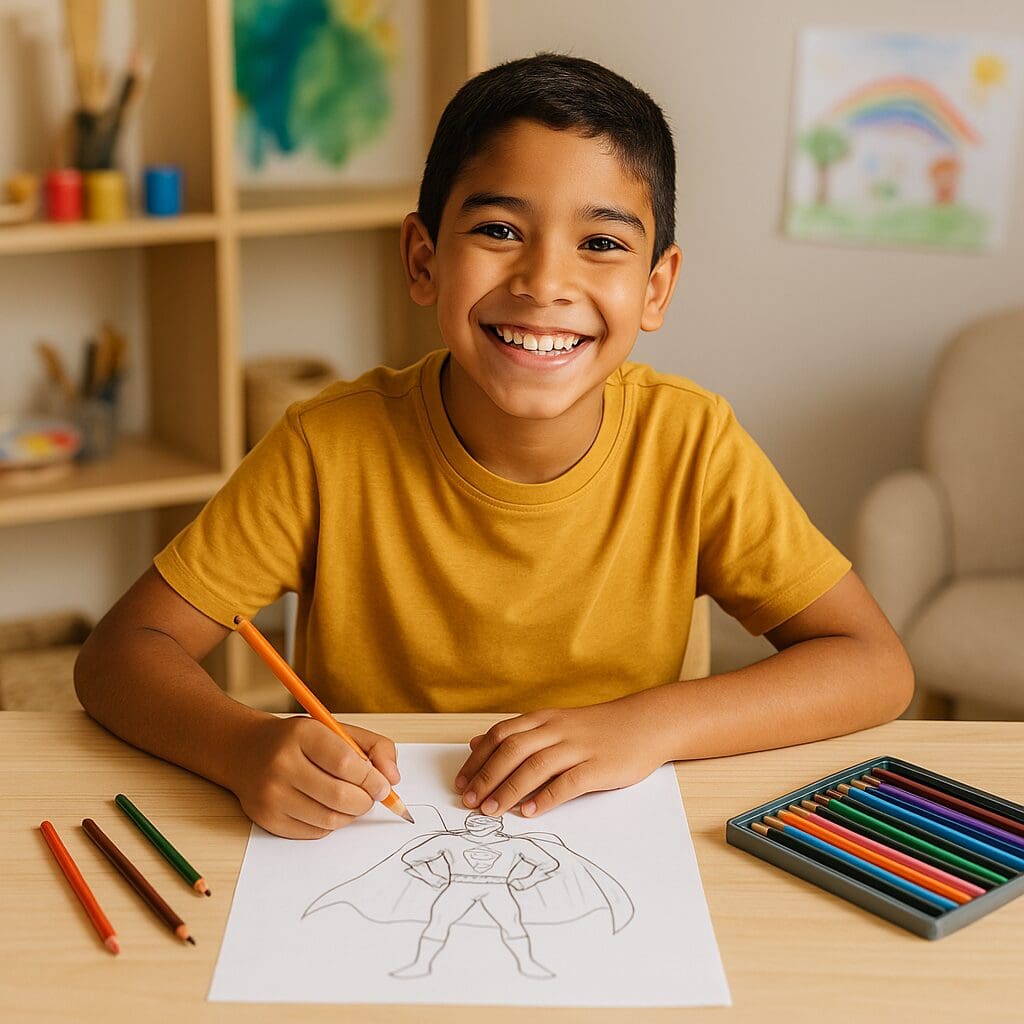
In art therapy, children use drawing, painting, building, or play to share their inner world. The process bypasses verbal barriers and allows expression through imagery, color, and movement. As they create, the therapist gently observes, reflects meaning, and helps build emotional vocabulary.
When a child tells a story through their art—whether by illustrating characters, emotions, or symbolic scenes—they begin to organize thoughts, sequence ideas, and make connections. Over time, this supports improved communication, social understanding, and confidence.
Stories bring it all together
Stories are powerful tools for neurodiverse children. Creating storylines or acting out plays from their drawings strengthens both expressive and receptive language. It encourages flexible thinking, imagination, and collaboration—skills that can be difficult in daily life.
Through storytelling, children integrate multiple forms of learning at once: emotional awareness, problem-solving, communication, and creativity. It’s playful, engaging, and developmentally appropriate—which means they learn best while still being children.
Reflecting the inner world
Art and play naturally reveal what a child is processing. What they struggle with—whether it’s anxiety, rigidity, or social connection—often appears symbolically in their art. The therapist helps them explore this safely, guiding insight and growth through color, texture, and story.
Takeaway
Neurodiverse children want to connect, play, and create—just like all kids. Art therapy gives them the tools to do that in a way that honors their unique ways of communicating. It helps them feel seen, understood, and capable of growth beyond words.
Schedule a free 15‑minute parent consultation © Beth Patane, MS, LCAT, ATR‑BC, NCC • All rights reserved • When Words Fail, Art Speaks