
Draw Water: An Original Art Therapy Assessment for Emotional Awareness
Helping Children & Teens Express What Words Cannot
Discover how the original “Draw Water” art therapy assessment helps children and teens express stress, emotional blocks, and future fears. Created by Westchester-based art therapist Beth Patane, LCAT, ATR-BC.
What Is the “Draw Water” Art Therapy Assessment?
Art therapy can reveal deep emotional truths in ways that words simply can’t. One of the original assessments I’ve developed in my Westchester practice is called “Draw Water”—a deceptively simple directive that often results in profound self-reflection and emotional insight.
I ask the client—child, teen, or adult—to draw water. That’s it. No further instructions. Just… draw water.
But what unfolds on the page often speaks volumes.
Why Water? Why It Works
Water is a universal symbol for emotion, movement, and life transitions. When someone draws water, they are often projecting:
- Where they are emotionally right now
- What they’ve been through in the past
- Where they imagine their life going in the future
- What’s blocking or helping them on that journey
For children and teens—especially those who are neurodivergent, highly sensitive, or overwhelmed—this can provide powerful clarity without pressure to talk.
Real Example: A Teen on the Edge
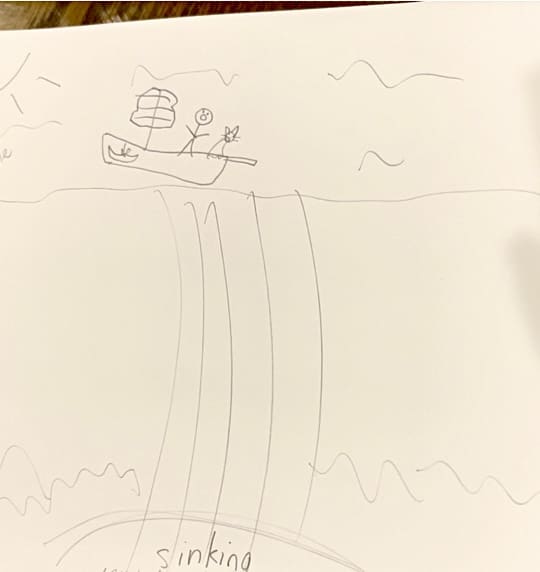
One teen drew himself standing at the edge of a cliff, overlooking rushing water cascading down a waterfall.
He didn’t have to say a word—his drawing made it clear:
- He felt like he was on the brink.
- He was considering a leap—or being pushed.
- His emotional world felt powerful, dangerous, and hard to control.
Art therapy allowed him to name and explore these feelings safely and indirectly, helping us work toward regulation and relief.
What I Observe in “Draw Water”
This assessment reveals so much through metaphor and visual storytelling. I often look for:
- 🌊 Water type: Is it still, stormy, frozen, flooding, or trickling?
- 🧍 Client placement: Are they in the water? On shore? Far away?
- ⛵ Supports/tools: Are there boats, bridges, or floating objects?
- 🧱 Obstacles: Rocks, dams, walls, or barriers that block flow
- 🌈 Future view: Is the water heading somewhere peaceful—or into chaos?
Each element holds symbolic meaning connected to emotional states, trauma, coping skills, and future orientation.
Who This Assessment Helps Most
“Draw Water” is ideal for:
- Children and teens experiencing anxiety, depression, or emotional overwhelm
- Clients facing transitions (like moving, divorce, or adoption)
- Neurodivergent individuals who process visually or nonverbally
- Adolescents dealing with risky behavior or impulsive choices
- Anyone who struggles to verbalize complex feelings
Even clients who are reluctant to talk are often willing to draw.
A Creative & Clinically-Grounded Approach
As a licensed creative arts therapist and board-certified art therapist, I’ve designed all of my assessments—including “Draw Water”—to be both trauma-informed and developmentally appropriate.
These tools help uncover the hidden layers of a child’s inner world in a way that’s safe, engaging, and therapeutic.
You don’t have to be “good at art.” You just need a safe place to start.
📍 Serving Westchester County and Surrounding Areas
🖌️ Specialized in working with children, teens, and neurodivergent youth
🔒 All art therapy assessments are original and proprietary
💻 Visit: bethpatanearttherapist.com to learn more or request a consultation
Related Keywords for SEO
#ArtTherapy #WestchesterTherapist #DrawWaterAssessment #CreativeTherapy #ChildTherapy #TeenMentalHealth #ArtTherapyWorks #EmotionalAwareness #BethPataneArtTherapist #TherapyForTeens #NeurodivergentSupport
Copyright © 2025 Beth Patane, LCAT, ATR-BC. All rights reserved.
This material is intended for use by licensed clinicians and educators only. Reproduction, redistribution, or modification without the express written consent of the author is strictly prohibited. For licensing inquiries or group use, please contact: [Bethpatanearttherapist.com]