
Summer Is Coming: Why May Can Be an Emotional Month for Children and Teens
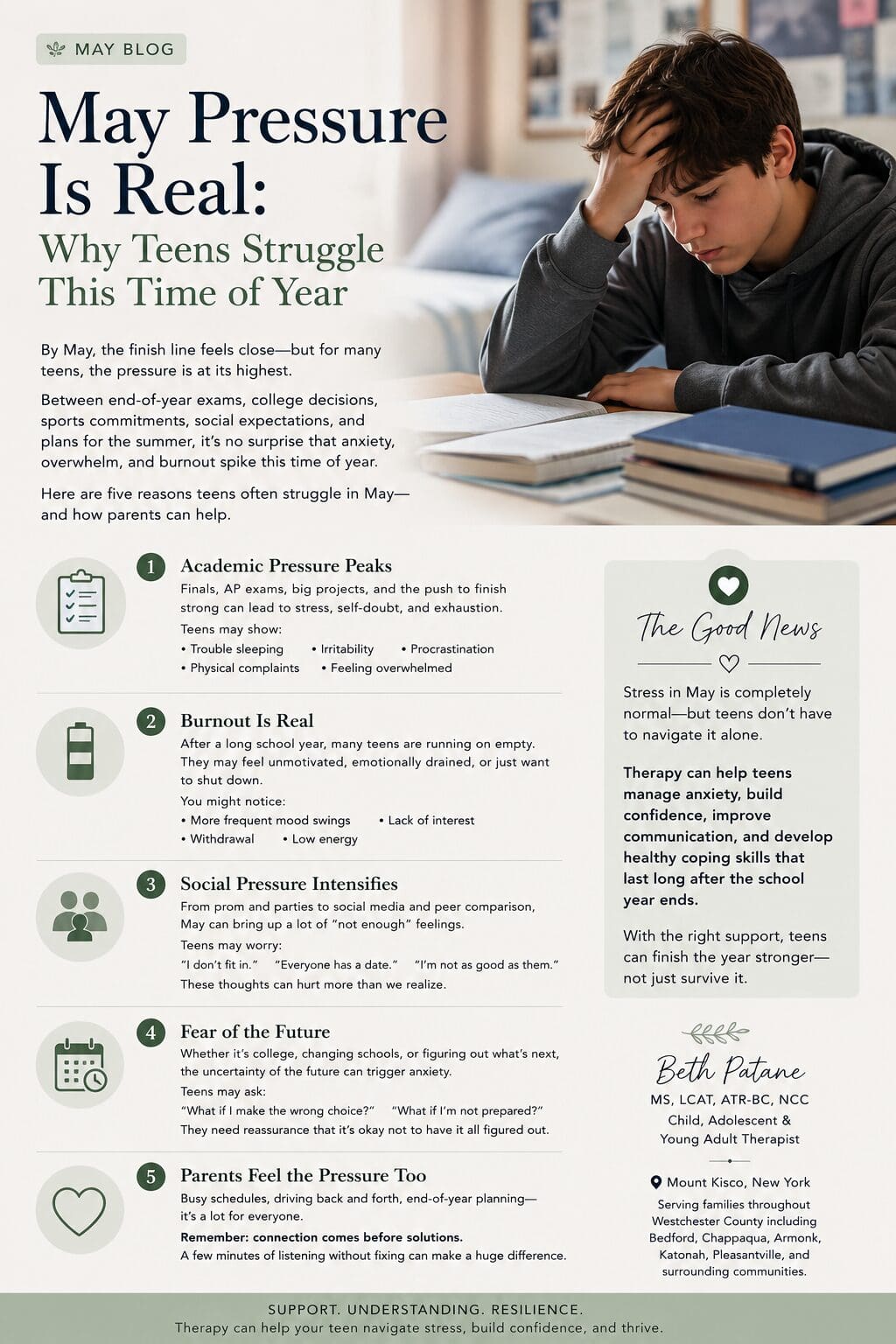
By May, summer break feels close enough to touch. While many children are excited about vacations, camps, and time off from school, this time of year can bring unexpected stress.
As a child and adolescent therapist in Mount Kisco, I often see an increase in anxiety, mood changes, and emotional outbursts during May and June. Between sleepaway camp, changing schools, new peer groups, and saying goodbye to teachers and routines, children and teens may be carrying more than parents realize.
Here are five reasons May can be emotionally challenging—and how parents can help.
1. Excitement and Anxiety Often Happen Together
A child can be excited about summer and worried at the same time.
Sleepaway camp, day camp, vacations, and changing routines can bring up questions like:
“What if I don’t make friends?”
“What if I miss home?”
“What if everyone already knows each other?”
Children don’t always say they’re anxious. Instead, you might notice irritability, stomachaches, trouble sleeping, or more emotional reactions.
2. Saying Goodbye Can Be Hard
Even children who are looking forward to summer may struggle with leaving favorite teachers, classmates, and routines behind.
Transitions are hard for many children, especially those with anxiety, ADHD, or highly sensitive temperaments.
You may notice:
- Increased clinginess
- Mood swings
- More emotional outbursts
- Sadness or irritability
3. Friendship Worries Become Bigger
Summer often means new peers, camps, sports teams, and unfamiliar social situations.
Children and teens may quietly wonder:
“Will I fit in?”
“Will anyone like me?”
“What if everyone already has friends?”
For teens, social media can intensify feelings of comparison and fears of missing out.
4. Unstructured Time Can Feel Overwhelming
After months of routines and schedules, summer freedom isn’t always relaxing.
Many children and teens actually thrive with predictability. Too much downtime can lead to boredom, anxiety, sibling conflict, and increased emotional sensitivity.
Simple routines, expectations, and downtime can help children feel more secure.
5. Parents Are Managing Transitions Too
Summer planning, camps, sports schedules, and changing childcare arrangements can leave parents feeling stretched thin.
Remember, children don’t need perfect parents.
They need connection.
A walk, an ice cream date, playing catch, drawing together, or simply listening without immediately solving the problem can help children feel safe and understood.
The Good News
Big feelings around summer are completely normal.
Whether it’s anxiety about sleepaway camp, making new friends, changing schools, or simply leaving familiar routines, children and teens don’t have to navigate these transitions alone.
Therapy can help children and adolescents build confidence, manage anxiety, strengthen coping skills, and feel more prepared for change.
Children are remarkably resilient. With support, they can move into summer feeling more confident and connected.
Beth Patane, MS, LCAT, ATR-BC, NCC
Child, Adolescent & Young Adult Therapist
Mount Kisco, New York
Serving families throughout Westchester County including Bedford, Chappaqua, Armonk, Katonah, Pleasantville, and surrounding communities.
Sleepaway camp anxiety • Child anxiety about camp • Teen anxiety summer • Child therapist Mount Kisco NY • Anxiety in children Westchester NY • Emotional regulation therapy for kids • Social anxiety in teens • Summer transition anxiety • Child anxiety therapist Westchester NY