
Structure Matters—Even in the Summer
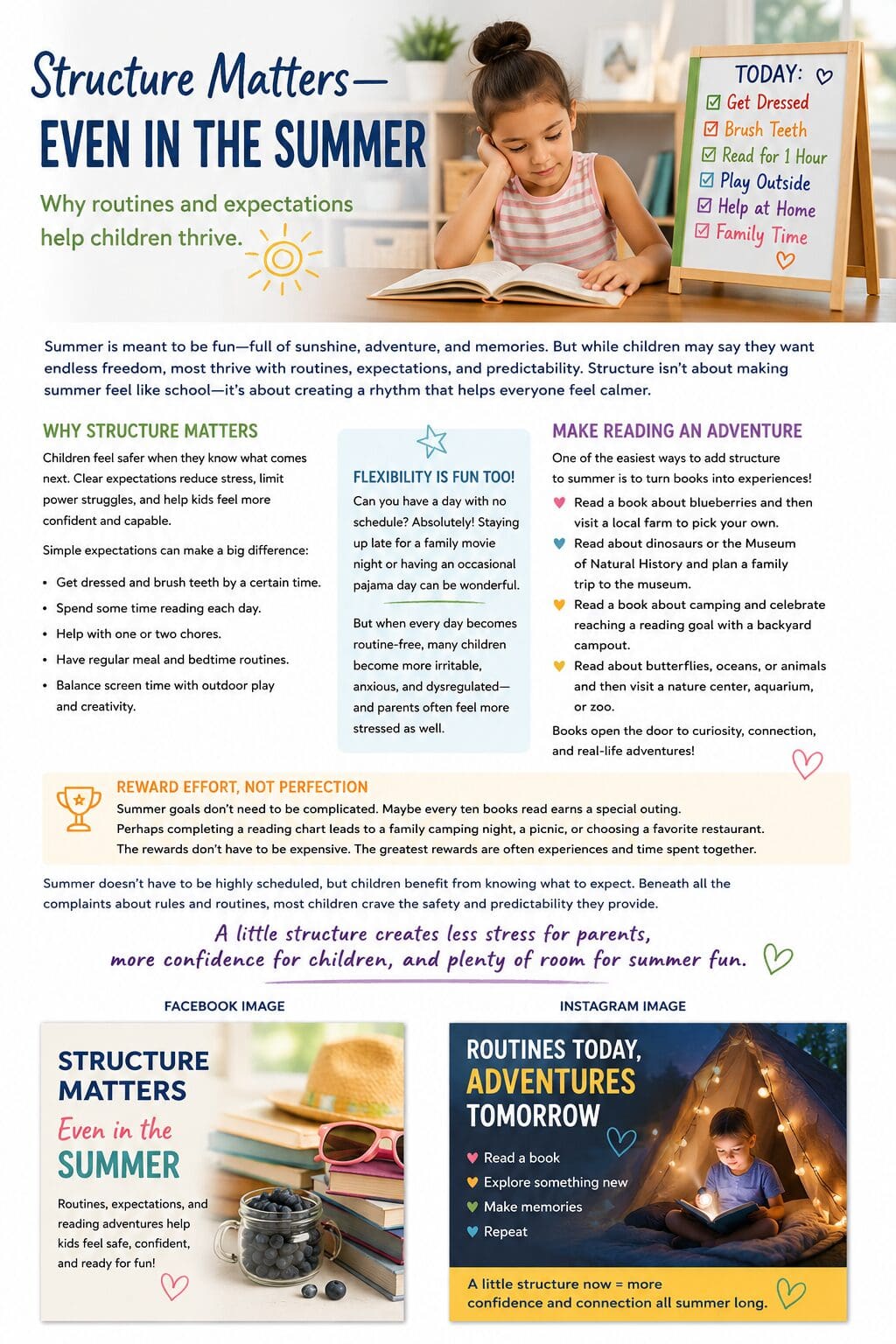
Summer should be fun. There should be late nights, vacations, popsicles, and days that don’t look like the school year. But while children may tell us they want complete freedom, most actually thrive when summer has some structure.
Children feel safer when they know what to expect. And parents feel less like they’re spending the day reminding, negotiating, and arguing.
Structure doesn’t have to mean strict schedules. It simply means having some expectations.
Keep It Simple
A summer routine might look something like this:
By 10:00 AM
✔️ Get dressed.
✔️ Brush teeth.
✔️ Make your bed.
✔️ Eat breakfast.
10:00–11:00
📚 Reading time.
Read independently, read together, listen to an audiobook, or simply spend time with books.
11:00
🏊 Get ready for the pool, playground, or another summer adventure.
Afternoons can be flexible—swimming, camps, errands, friends, bike rides, or even a quiet day at home.
The point isn’t to schedule every minute. The goal is to create a rhythm.
Children Need Expectations
Kids may complain about routines, but most thrive with them.
They like knowing:
- “This is what happens in the morning.”
- “This is what comes next.”
- “These are the expectations.”
Clear expectations create less stress and fewer power struggles.
Instead of spending the morning saying:
“Get dressed!”
“Brush your teeth!”
“Put down the iPad!”
“Read something!”
Children know what is expected and can move on with their day.
Yes, Break the Rules Sometimes!
Can you stay up late for a movie night?
Absolutely.
Can you have a lazy pajama day or eat ice cream after dinner?
Of course!
Those are some of the best parts of summer.
But if every day becomes routine-free, many children become bored, anxious, irritable, and dysregulated. Parents often become exhausted too.
A little structure actually creates more freedom because children know what is expected.
Make Reading an Adventure
Reading doesn’t have to feel like school.
Read a book about blueberries and then go blueberry picking.
Read about dinosaurs and visit the American Museum of Natural History.
Read about camping and celebrate with a backyard campout.
Read about butterflies or ocean animals and then visit a nature center or aquarium.
Books can become experiences and memories.
Reward Effort, Not Perfection
Maybe every ten books read earns a family movie night.
Twenty books could mean a backyard camping adventure.
A week of meeting expectations might mean choosing dinner or getting ice cream.
Children remember experiences far more than prizes.
Summer Is About Balance
Summer doesn’t need to be highly scheduled, but children benefit from having a rhythm to their days.
By 10 AM, dressed and ready.
An hour of reading.
Then off to the pool, camp, the playground, or whatever adventure awaits.
Because beneath all the complaints about rules and routines, children are looking for something deeper: safety, predictability, and connection.
A little structure creates less stress for parents, more confidence for children, and plenty of room for summer fun.
☀️ Summer doesn’t need to be rigid—but children thrive with rhythm.
✔️ Dressed and brushed by 10 AM.
📚 Read for an hour.
🏊 Then off to the pool, camp, or summer adventures.
Children may complain about routines, but underneath those complaints they crave safety, predictability, and knowing what comes next.
A little structure creates less stress for parents and more confidence for children.
#SummerParenting #ChildDevelopment #ADHDKids #AnxietyInChildren #WestchesterParents #ArtTherapy #MountKisco #SummerBreak #EmotionalRegulation